Heating & Cooling
A furnace or heat pump adds heat while a condenser and coil set move it indoors. The same ductwork then carries tempered air through the house in either direction.
Residential heating, cooling & airflow
Heating and cooling only perform as well as the parts around them. Air crosses filters, coils, duct runs and registers before it reaches a room, and a thermostat decides when the cycle begins. When the indoor unit, the outdoor equipment, the airflow path and the controls are read together, a home stays steady from one season to the next.
How comfort is built
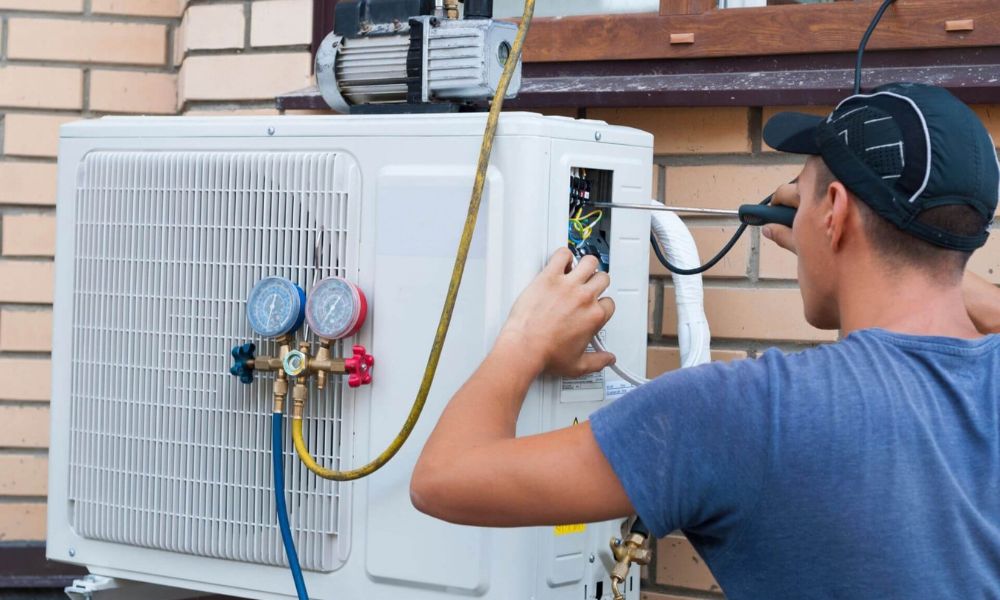
Comfort is never produced by a single component. It is the result of a furnace or heat pump, an air handler, a condenser, ductwork, filters and controls working as one arrangement — and each part changes how the others behave.
A furnace or heat pump adds heat while a condenser and coil set move it indoors. The same ductwork then carries tempered air through the house in either direction.
Supply runs, return ducts, transitions and registers decide how much air reaches each room. Narrow branches, closed dampers or blocked returns surface as uneven rooms.
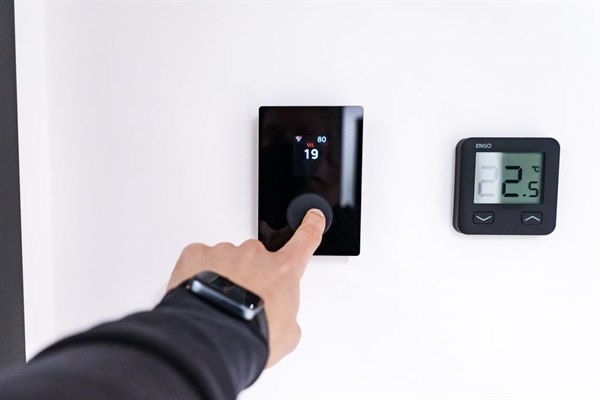
The thermostat reads room temperature and signals the control board. Contactors, relays and low-voltage wiring then decide what the compressor, blower and burner do next.
Coil condition, filter loading, line integrity and outdoor clearance all shift through the year. A check before each changeover keeps behaviour predictable.
About the trade
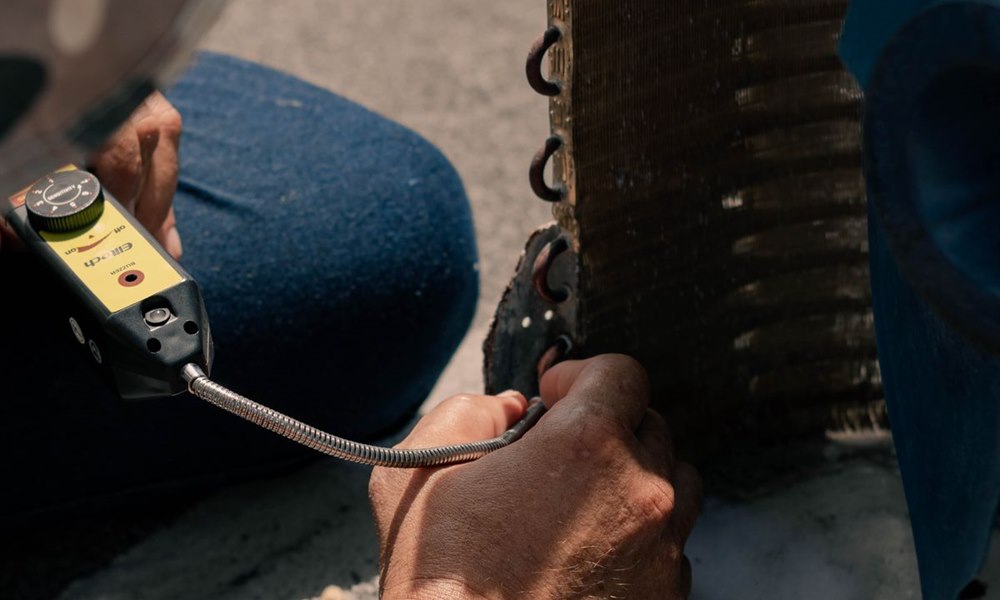
At Northstar Pro HVAC Repair in Queens Village, New York, understanding how the complete HVAC system fits together is an important part of addressing heating and cooling problems. Most homes use a split arrangement. An outdoor unit — the condenser — rejects heat to the outside air. A refrigerant line carries that energy to an indoor coil, where a fan moves air across the coil before it enters the duct network.
The indoor equipment changes with the climate. A furnace uses a burner and a heat exchanger to warm air, while a heat pump runs a reversible cycle to add or remove heat. In both cases an air handler or fan coil drives the air and pushes it into the ductwork.
Controls close the loop. A thermostat compares room temperature against a set point, the control board reads that call, and contactors with relays start the compressor, blower and burner. Filters, coils and ductwork then decide how well that air actually moves.
What gets worked on
Each line of work below covers a defined part of the equipment or of the air path around it, so the right check starts from the right place.
Fault-finding on cooling equipment: compressors, contactors, blower motors, refrigerant lines, capacitor checks and control board faults.
Learn moreCoil cleaning, filter service, condensate line clearing and control checks so the unit is readied before a cooling season begins.
Learn moreBurners, ignition parts, heat exchangers and flues on gas and electric heating equipment.
Learn moreBlower inspection, filter rack cleaning, flame sensing and airflow measurement.
Learn moreCharge checks, reversing valve operation, defrost controls and indoor coil condition.
Learn moreReplacement, scheduling changes, low-voltage wiring and control board checks.
Learn moreRoom-by-room readings at supply and return registers to locate restrictions.
Learn moreLeak sealing, insulation checks and register balancing across supply and return runs.
Learn moreComponent guide
Five areas of an installation decide how a system heats, cools and moves air. Each one changes what the others have to do.
The indoor unit — an air handler or a fan coil — contains the blower and the evaporator coil. It draws return air through the filter, moves that air across the coil and pushes it into the supply ducts.
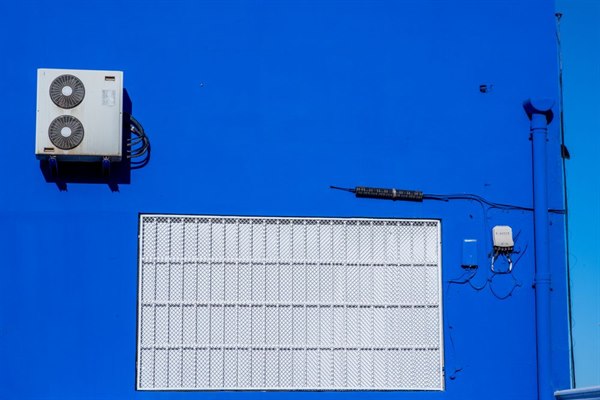
The outdoor cabinet holds the compressor, the condenser coil and the fan. It rejects heat to the outside air, and on a heat pump the same cabinet reverses the cycle to bring heat indoors instead.
Supply ducts carry conditioned air to the registers, while return ducts and plenums bring it back. Trunk lines, branches, transitions and balancing dampers shape the flow.
Thermostat, control board, contactors, relays and low-voltage wiring. Read together they sense the room and decide when to call for cooling or heat.
Filters sit at the return path or at the equipment itself. They catch dust and debris so the blower and coil stay clean and airflow stays steady.
Routine care
Most system complaints start as small restrictions rather than sudden failures. The checks below are simple, repeatable and easy to keep up with between service visits.
A loaded element starves the blower of air. Check the filter and replace it on the interval the equipment calls for.
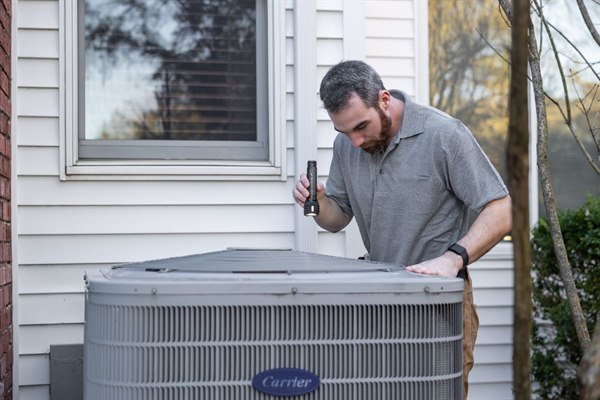
Leave working clearance around the cabinet. Leaves, vines and debris reduce the airflow crossing the coil.
Confirm the schedule, the set point and the mode. A switch left on the wrong setting can hold a system off.
Read airflow at several registers. Rooms that stay uneven usually point to a restriction in the branch duct.
Rattling, hissing or grinding usually traces back to a loose panel, a bearing or a refrigerant issue.
A look before the cooling season and again before the heating season covers both changeovers.
Common symptoms
Behaviour changes are usually readable. A room that cools late, a vent that barely moves air or a unit that stops mid-cycle each narrow the search towards a specific part of the installation.
Vents move less air than the system is set to deliver.
Check Filter loading, closed registers, blower condition.
One room stays warmer or cooler than the rest of the house.
Check Room airflow, duct branches, damper positions.
Rattling, hissing, grinding or a repeated click during operation.
Check Loose panels, fan bearings, relay chatter.
Air at the register feels warm even though the unit is running.
Check Coil condition, refrigerant charge, airflow.
The system stops partway through a cold period.
Check Flue, ignition, limit switch, breaker.
The display is blank, unresponsive or out of step with the equipment.
Check Power, wiring, batteries, mode selection.
The unit starts and stops more often than the load requires.
Check Equipment sizing, charge level, control settings.
Static pressure rises and the system runs longer to reach set point.
Check Collapsed duct, blocked return, fouled coil.
Seasonal checklist
A short set of checks taken before the weather changes keeps a system working the way it was set up. Most of the work takes minutes and needs no tools beyond a light and a filter.
Clear debris from the outdoor coil, confirm the filter is seated and let the system run before the warmest part of the day.
Confirm the thermostat schedule, check the burner lights and listen for even airflow at a supply register.
Note the filter size, mark the install date and swap the element out as soon as airflow starts to weaken.
Keep leaves and grass away from the cabinet and rinse the coil face gently when debris builds up on the fins.
Replace the batteries, confirm the mode is correct and reset the schedule at each changeover.
Compare registers room by room. A consistent gap between rooms usually traces to one duct branch.
Contact
Describe what the system is doing, which equipment is installed and when the behaviour started. That detail narrows the check before any panel is opened.
System checks are arranged by phone or email. Have the equipment type, the room and the behaviour to hand and the visit can be pointed at the right part.